
sticky mat for shoes
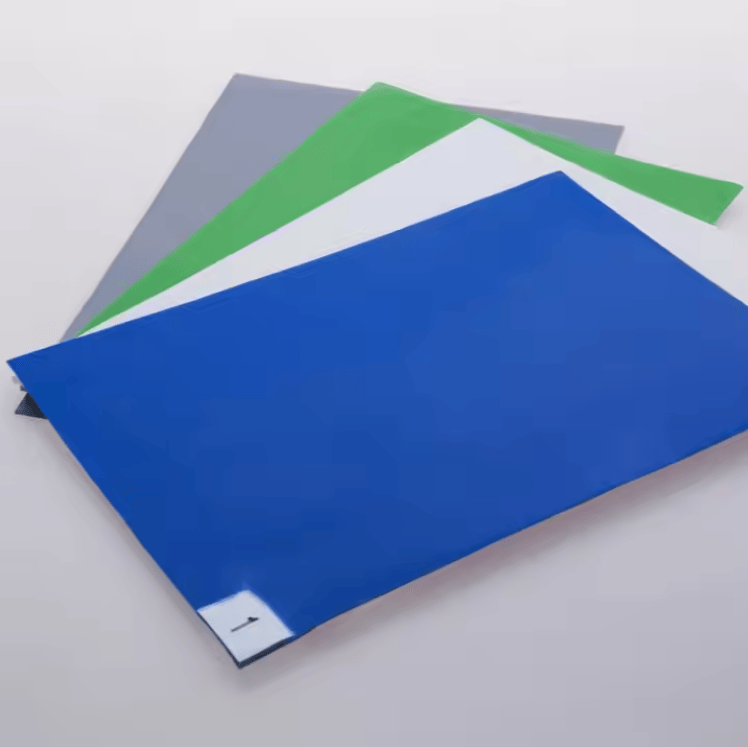
How to Choose a Sticky Mat for Shoes
When selecting a sticky mat for shoes, the goal is to prevent dirt, dust, and debris from being tracked into sensitive environments, like cleanrooms, offices, or finished construction areas. Choosing the right sticky mat involves understanding the environment, traffic volume, type of dirt, and adhesive strength. Here’s a detailed guide on how to choose the best sticky mat for shoes:
1️⃣ Consider the Environment
Where you’ll use the sticky mat is one of the most important factors. Different environments have specific requirements when it comes to contamination control.
Cleanrooms: If you're using the mat in a cleanroom, you’ll need a sticky mat designed to trap even fine dust particles and prevent contamination from shoes, wheels, or equipment.
Construction Sites: For construction zones, choose a heavy-duty sticky mat that can handle mud, dirt, and larger debris. The adhesive needs to be strong enough to remove heavy particles from boots and construction vehicles.
Offices or Finished Floors: If you're protecting an office or clean space, a standard sticky mat will suffice for general dirt and dust. Make sure the mat is discreet and blends with the surroundings.
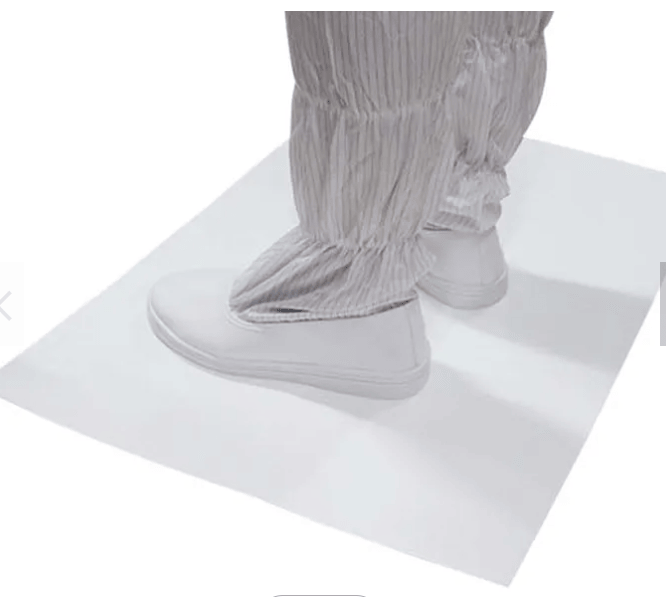
3️⃣ Choose the Right Adhesive Strength
Sticky mats come with varying levels of adhesive strength, and it’s essential to choose the right one depending on the environment and type of debris you’re dealing with.
High-Tack Adhesive: If you’re dealing with large dirt, mud, or debris (like on a construction site or a high-traffic industrial area), choose a sticky mat with a high-tack adhesive to capture and hold larger particles.
Medium-Tack Adhesive: For environments with general dust or light debris (such as office entrances or research labs), a medium-tack mat works well without being too sticky, which could cause discomfort or leave adhesive residue.
Low-Tack Adhesive: If you need a mat for sensitive areas (like cleanrooms or laboratories), choose a mat with low-tack adhesive to avoid transferring sticky residue or damaging sensitive flooring while still capturing fine dust.
4️⃣ Size of the Mat
Sticky mats are available in various sizes, and selecting the right size is important for ensuring that the mat is effective.
Standard Sizes: Common sticky mat sizes are 18” x 36” or 24” x 36”. These are typically sufficient for smaller doorways or areas with low to medium traffic.
Larger Mats or Rolls: For high-traffic areas or larger entry points, consider a sticky mat roll that you can cut to the appropriate size. This is ideal for environments like construction sites, where you may need to cover a larger surface.
Multiple Mats: You may also want to place multiple mats in sequence, especially in highly-trafficked zones. This helps ensure maximum dirt removal.
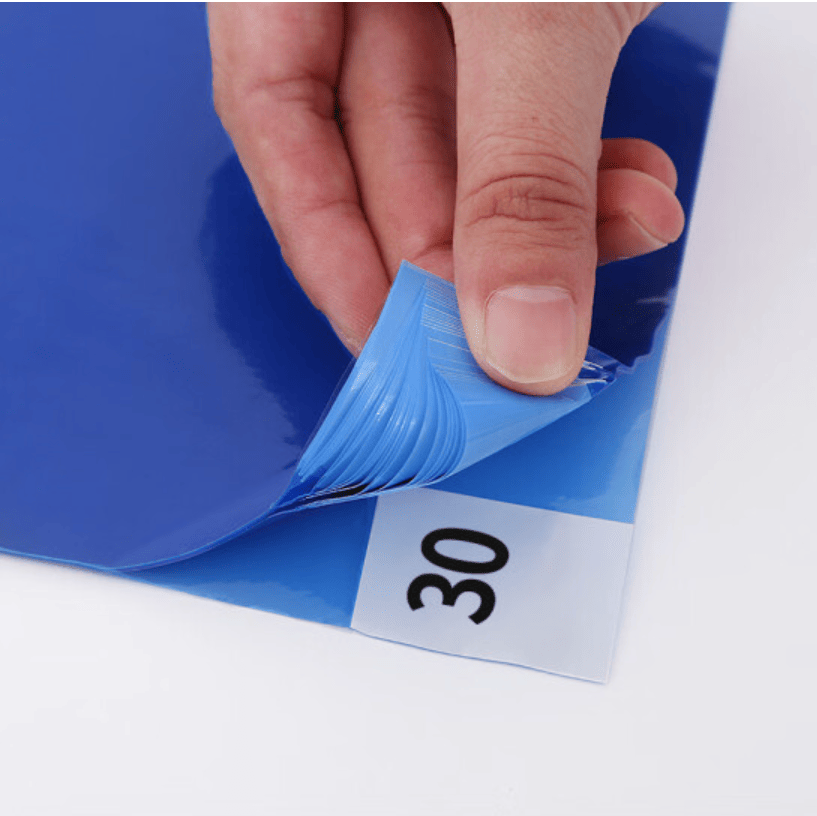
5️⃣ Number of Layers -30 Lays
Sticky mats usually come with multiple adhesive layers, which can be peeled away once they are dirty. The number of layers determines how long the mat will last before needing to be replaced.
More Layers: A mat with more layers will last longer, making it ideal for high-traffic areas. Typical sticky mats come with anywhere from 30 to 60 layers.
Fewer Layers: For lighter usage or temporary areas, you may choose mats with fewer layers, but keep in mind that they may need to be replaced more frequently.
6️⃣ Material and Durability
The material of the sticky mat should be able to handle the type of dirt and conditions you expect.
Vinyl or Polyethylene Mats: These are durable and suitable for most environments, including cleanrooms, offices, and light industrial areas.
Heavy-Duty Mats: For construction or industrial sites, heavy-duty mats made from thicker materials can handle the more aggressive dirt and moisture found in these environments.
Antimicrobial Mats: In environments where bacteria or viruses are a concern, you may want to choose a mats treated with antimicrobial agents to help prevent microbial growth.
7️⃣ Ensure Non-Residue Adhesive
It’s important that the mat’s adhesive doesn’t leave a sticky residue on shoes or floors. Choose mats designed to capture dirt without transferring adhesive to shoes or leaving residue behind on the floor when removed.
Cleanroom-Grade Mats: These are typically designed with low-residue adhesive to ensure they don’t interfere with cleanroom standards.
General Use Mats: For construction sites or warehouse environments, mats are usually designed to trap debris without transferring any sticky material.
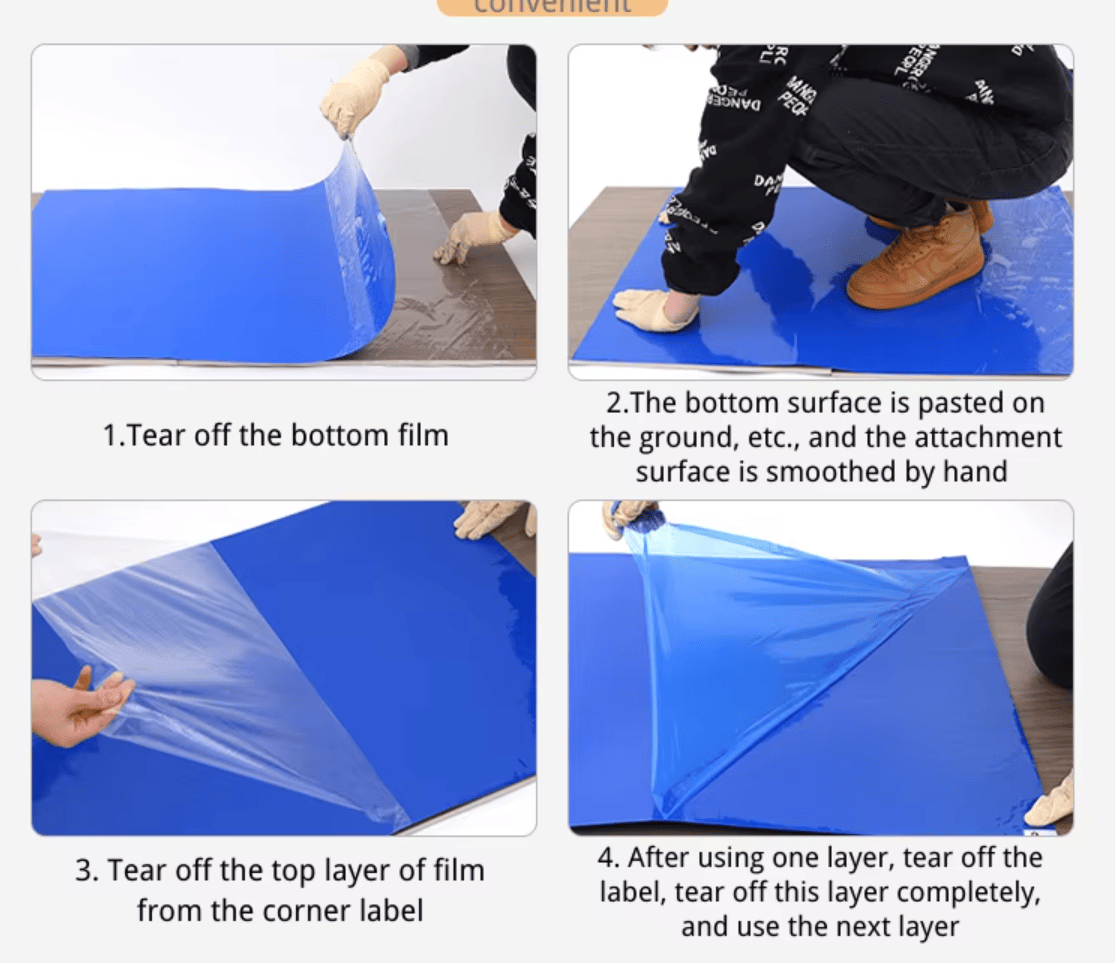
8️⃣ Consider Placement and Security
Sticky mats need to be properly placed to work effectively:
Secure Placement: Ensure the mat stays in place and doesn’t slide when people walk across it. Some mats have adhesive on the back to prevent movement, or you can use tape to secure it.
Multiple Mats: In areas with extremely high foot traffic, use multiple sticky mats or install a larger mat to ensure optimal dirt removal.
9️⃣ Specific Requirements for Different Environments
Construction Sites: Use heavy-duty sticky mats with strong adhesive to handle mud, large debris, and heavy foot traffic.
Cleanrooms and Labs: Choose low-tack, residue-free sticky mats to ensure fine dust particles are captured without affecting the environment or leaving any residue.
Offices or Commercial Spaces: Standard medium-tack sticky mats with a modest adhesive strength will work well for office entryways and lighter dirt tracking.
💡 Conclusion:
Choosing the right sticky mat for shoes depends on the type of environment, traffic level, adhesive strength, and durability required. For construction zones, go for high-tack, heavy-duty mats. For cleanrooms or labs, opt for low-tack adhesive mats that won’t leave residue but still effectively trap fine dust. Size, layers, and material should also be matched to the needs of the area to ensure the mat performs well over time without needing frequent replacement.